
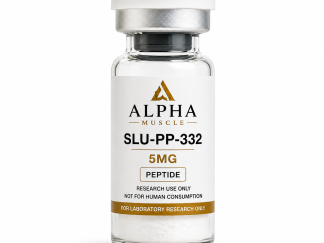
SLU-PP-332 5MG
€120.00
Alpha Muscle Peptides
SLU-PP-332
1 x 5mg vial Powder
Description
USA DOMESTIC
How This Works
SLU-PP-332 is a synthetic small-molecule pan-agonist of the estrogen-related receptors (ERRα, ERRβ, and ERRγ), with strongest activity at ERRα. In murine studies, acute administration activated an aerobic-exercise transcriptional program, increased mitochondrial respiration and fatty-acid oxidation in skeletal muscle, and improved endurance capacity and cardiometabolic phenotypes The compound acts as an “exercise mimetic” by engaging metabolic pathways typically activated during physical training, without requiring the mechanical stress of actual exercise. However, all evidence to date is preclinical—no human trials have been conducted.
Preclinical Observations
Findings from murine studies only.
- Metabolic effects: Enhanced mitochondrial function, increased fatty-acid oxidation, improved glucose tolerance in diet-induced obese mice[2].
- Cardiac benefits: Ameliorated heart failure through enhanced cardiac fatty-acid metabolism and mitochondrial function in preclinical models[3].
- Endurance enhancement: Increased treadmill running capacity and muscle oxidative capacity in mice[1].
- Renal effects: Reversed mitochondrial dysfunction and inflammation in aging kidney models[4].
- Human safety unknown: No data on human tolerability, pharmacokinetics, or adverse effects exist.
Administration Technique
General subcutaneous guidance (note: published studies used intraperitoneal route)[5][6].
- Clean the vial stopper and skin with alcohol; allow to dry completely.
- For subcutaneous administration: pinch a skinfold; insert needle at 45–90° into subcutaneous tissue.
- Do not aspirate for subcutaneous injections; inject slowly and steadily.
- Rotate sites systematically (abdomen, thighs, upper arms) to avoid lipohypertrophy.
- Note: Published murine studies used intraperitoneal administration; subcutaneous route is not validated for this compound.
SLU-PP-332 Dosage Chart
SLU-PP-332 is dosed at 1.25 mg–2.5 mg daily via subcutaneous injection in educational protocols. A 5 mg vial reconstituted with bacteriostatic water yields about 1.67 mg/mL. This information is for research and educational use only.
- Evidence Base: Preclinical only—in vivo mouse studies with intraperitoneal dosing (25–50 mg/kg twice daily).
- Reconstitute: Add 3.0 mL bacteriostatic water → ~1.67 mg/mLconcentration.
- Murine dose range: 1250–2500 mcg daily (for a 25 g mouse), administered in two divided doses.
- Easy measuring: At 1.67 mg/mL, 1 unit = 0.01 mL ≈ 16.7 mcg on a U-100 insulin syringe.
- Storage: Lyophilized: −20 °C (−4 °F); reconstituted: 2–8 °C (35.6–46.4 °F).
Dosing & Reconstitution Guide
Educational guide based on published murine regimens
Murine-Equivalent Protocol (3 mL = ~1.67 mg/mL)
| PHASE | DAILY DOSE (MCG) | PER-INJECTION DOSE (MCG) | UNITS PER INJECTION (ML) |
|---|---|---|---|
| Weeks 1–2 | 1250 mcg | 625 mcg | 37.5 units (0.375 mL) |
| Weeks 3–8 | 2500 mcg | 1250 mcg | 75 units (0.75 mL) |
Route & Frequency: Published murine studies used intraperitoneal administration twice daily (25–50 mg/kg)[1][2][3]. Daily mcg values above are expressed for a 25 g mouse. No reputable sources support once-daily subcutaneous use for this compound.
Reconstitution Steps
- Draw 3.0 mL bacteriostatic water with a sterile syringe.
- Inject slowly down the vial wall; avoid foaming.
- Gently swirl/roll until dissolved (do not shake).
- Label and refrigerate at 2–8 °C (35.6–46.4 °F), protected from light.
Reviews
There are no reviews yet.